If you are looking into solar panel installation in NSW, you will quickly find plenty of companies offering different systems and packages. Some focus on keeping the price low, while others offer premium panels, larger systems or battery storage.
It can be difficult to know what actually matters.
Solar panels are a long-term addition to your home, so the installation itself deserves as much attention as the panels you choose. The roof needs to be suitable, the system needs to be sized properly and the electrical work needs to be completed correctly.
What Is Solar Panel Installation?
Solar panel installation is the process of fitting solar panels to a suitable part of your property and connecting them to a solar inverter and your home’s electrical system.
The basic system usually includes:
- Solar panels
- Solar inverter
- Mounting equipment
- Electrical cabling
- Safety and protection equipment
- Monitoring equipment
Depending on your requirements, you can also add a solar battery to store excess electricity.
The panels generate electricity from sunlight during the day. Your home can use that electricity, while excess generation may be sent to the electricity grid depending on your system and electricity plan.
Why Are Solar Panels Popular in NSW?
NSW has plenty of homes with suitable roof space for solar, and many homeowners are interested in generating some of their own electricity.
The biggest practical benefit is that solar can produce electricity during daylight hours when your household may already be using appliances and other equipment.
Solar Can Help With Daytime Electricity Use
Think about the appliances you use during the day.
You might have:
- Air conditioning
- Pool pumps
- Washing machines
- Dishwashers
- Home office equipment
- Electric hot water systems
When these appliances are running while your solar panels are generating electricity, your home can use some of that solar power directly.
The amount you save will depend on your electricity usage, system performance and electricity plan.
How Does Solar Panel Installation Work?
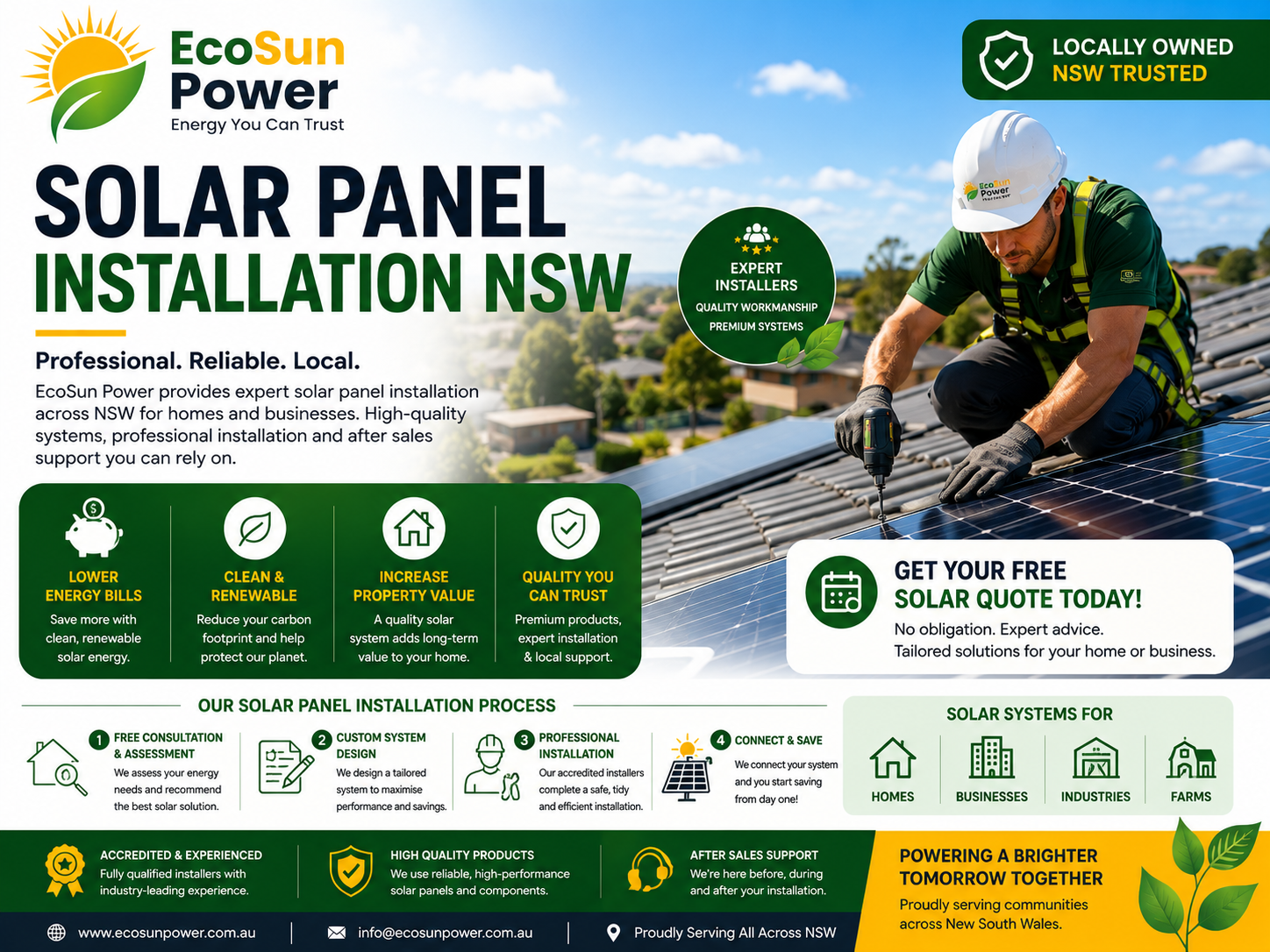
A proper solar installation involves several steps.
The panels being physically attached to the roof is only one part of the job.
Step 1: Roof and Property Assessment
The installer should first assess your property.
They may look at the roof condition, roof direction, available space, pitch, access and shading.
Trees and nearby buildings can be particularly important because shadows can reduce solar generation.
Step 2: Electricity Usage Assessment
Your recent electricity bills can help determine how much electricity your household uses.
The installer should also understand when you normally use electricity.
This information helps them recommend a system that suits your home instead of simply suggesting a standard package.
Step 3: System Design
The solar system is then designed around your roof and electricity requirements.
The design determines where the panels will be positioned and how the inverter and other equipment will be installed.
Step 4: Panel Installation
The mounting equipment is fitted to the roof before the panels are secured into position.
The panels need to be positioned carefully so that the system can make good use of available sunlight.
Step 5: Electrical Installation
The panels are connected to the inverter and the required electrical equipment.
The system is then tested to make sure everything is operating correctly.
Choosing the Right Solar Panel System
There are many different solar panels available, and it can be tempting to focus entirely on efficiency or brand name.
The better approach is to look at the complete system.
Consider Panel Specifications
When comparing solar panels, look at:
- Panel efficiency
- Product warranty
- Performance warranty
- Panel dimensions
- Manufacturer information
- Suitability for your property
Ask the installer for the exact panel model rather than accepting a quote that only lists the brand.
Choosing the Right Solar Inverter
The inverter is an important part of a solar panel system.
It converts the electricity produced by the panels into electricity that your home can use.
Why the Inverter Matters
If the inverter has a problem, it can affect the operation of your solar system.
When comparing quotes, check the inverter brand, model, warranty and monitoring features.
Ask the installer why that particular inverter has been recommended for your system.
How Many Solar Panels Do You Need?
There is no standard number of panels that works for every NSW home.
The right number depends on your electricity consumption, roof space and the type of system being installed.
Start With Your Electricity Bills
Your recent bills provide a useful starting point.
A larger household with higher electricity consumption may need a larger solar system.
But installing more panels than your roof or electricity usage requires isn’t necessarily the best solution.
A good installer should explain how they arrived at their recommended system size.
Roof Direction and Shading
The roof has a major influence on solar panel performance.
Available Roof Space
Your installer should identify which parts of the roof are suitable for panels.
Not every section of a roof receives the same amount of sunlight.
Trees and Nearby Buildings
Shading can change throughout the day.
A tree may not cause much shade in the morning but could cover part of the roof in the afternoon.
The installer should consider these conditions when designing the system.
Should You Install a Solar Battery?
A battery stores excess electricity generated by your solar panels.
This stored electricity can then potentially be used when your solar panels aren’t producing enough electricity, such as in the evening.
Is Battery Storage Right for Your Home?
It depends.
If you use a lot of electricity during the day, you may already use much of the solar power as it is generated.
If most of your electricity consumption happens after sunset, battery storage could be worth considering.
Look at your actual electricity usage before deciding.
Solar Panel Installation Costs in NSW
The cost of solar panel installation varies from property to property.
System size, panel and inverter selection, roof type, installation difficulty and battery storage can all affect the final price.
Compare Quotes Properly
Don’t compare companies using only the final price.
Check what each quotation includes.
A detailed quote should normally specify:
- Number of panels
- System capacity
- Panel model
- Inverter model
- Mounting system
- Installation
- Electrical work
- Monitoring
- Warranty
- Additional costs
This makes it much easier to see whether you are actually comparing similar systems.
How to Choose a Solar Installer in NSW
The installer can have a major impact on the quality and reliability of your solar system.
Check Their Qualifications
Ask who will carry out the electrical work and whether the relevant licensing and accreditation requirements are met.
Look at Reviews
Customer reviews can provide useful information about communication, installation quality and after-sales support.
Don’t just look at the star rating. Read the actual comments.
Ask About After-Sales Service
Before you sign, find out what happens if there is a problem after installation.
Ask who handles warranty claims and how you can contact the company if the system develops a fault.
Solar Incentives and Rebates
Government incentives can affect the upfront cost of an eligible solar installation.
However, the available programs and eligibility requirements can change.
Check Current Requirements
If your solar quote includes an incentive, ask the installer to explain how the price has been calculated.
It is also worth checking current official information before signing a contract.
Making Better Use of Your Solar Panels
Once your solar panel installation is complete, the way you use electricity can also affect how much value you get from the system.
Use Appliances During Daylight Hours
Where practical, consider running high-use appliances while your panels are producing electricity.
You could run the washing machine, dishwasher or pool pump during the day instead of automatically waiting until the evening.
This can help your household make more direct use of the electricity your solar system is generating.
Final Thoughts
Solar panel installation in NSW is not simply about buying a certain number of panels.
Your roof, electricity usage, shading, system design, inverter and installer all matter.
Before choosing a company, get a few detailed quotes and compare the actual equipment and services included in each one.
Don’t automatically choose the cheapest option. Look at the quality of the installation, warranty terms and support as well.
A properly planned solar system can be a useful long-term addition to your home, and taking a little extra time to choose the right installer can make the process much smoother.